
Biomedical Network Science Lab
The Biomedical Network Science (BIONETS) Lab investigates molecular mechanisms, using techniques from network science, (graph-based) AI and combinatorial optimization. We develop algorithms, AI models, and software tools to mine omics data for such mechanisms, with the aim to better understand cellular pathways and, ultimately, pave the way for targeted and causally effective treatments of complex diseases. We also develop privacy-preserving decentralized biomedical AI solutions, which enable cross-institutional studies on sensitive data. Finally, we are interested in meta-scientific questions such as reproducibility and the impact of data bias on biomedical AI systems.

News
scXMatch published in Bioinformatics

Happy to announce that our paper “Quantifying distribution shifts in single-cell data with scXMatch” is now out in Bioinformatics! Do cells from two conditions differ globally? In single-cell analysis, this is often judged from UMAPs, clusterings, or DEG counts, approaches that lack statistical rigor and invite confirmation bias. scXMatch answers it with a scalable, k-NN…Read more
SignifiKANTE published in Bioinformatics

We are excited to share that our paper “SignifiKANTE – efficient P-value computation for gene regulatory networks” has now been published in Bioinformatics. Permutation-based significance testing is a common approach for filtering edges in regression-based gene regulatory network inference, but so expensive that it is usually skipped on real-world gene expression data. We tackle this…Read more
GNExT published at Nature Genetics
Our GNExT paper is officially out in Nature Genetics! https://doi.org/10.1038/s41588-026-02708-6 GNExT (GWAS Network Exploration Tool) tries to make it as easy as possible to set up your own GWAS exploration platform from your GWAS summary statistics and scales well for large datasets. GNExT takes your raw GWAS dataset, preprocesses it with a custom Nextflow pipeline,…Read more
3-year extension of DyHealthNet
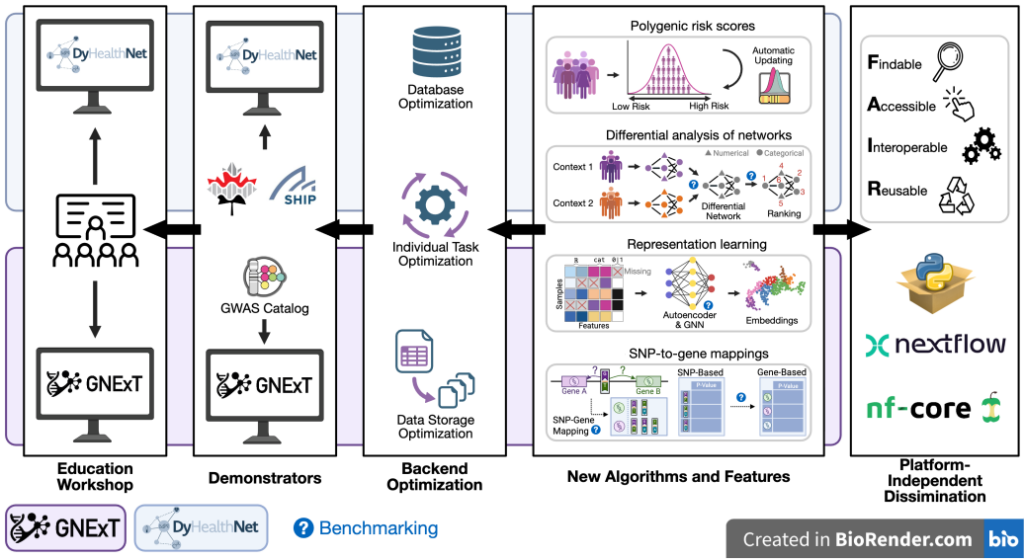
Last week, we got the happy news that our DFG-funded DyHealthNet research project will be extended by another 3 years! Our main goal in DyHealthNet is to make cohort data more explorable. In the first phase of the project, we developed prototype platforms, primarily for application to the Collaborative Health Research in South Tyrol (CHRIS)…Read more
Welcome Julius

On July 1st, Julius Stutz joined the BIONETS Lab as a new research associate. He will work on new methods for representing and evaluating decision trees.Read more
BIONETS on LinkedIn

The Bionets group is now on LinkedIn! Feel free to follow us for news and scientific updates.Read more
Scientific exchange with DaiSyBio (TUM)
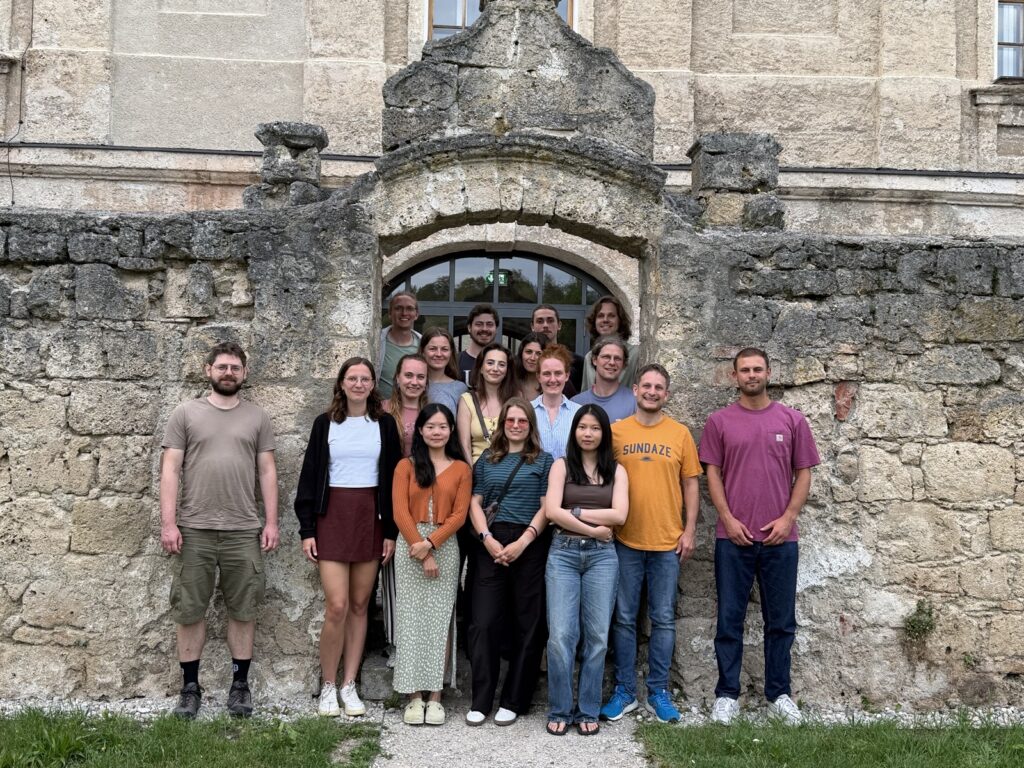
We went on a joint scientific retreat with the DaiSyBio group at TUM’s Science & Study Center in Raitenhaslach, Burghausen. The two days were packed with great scientific exchange that will keep us busy with new ideas for months to come! We kicked things off with a joint poster session, held focused discussions in a…Read more
Best Scientific Contribution Award
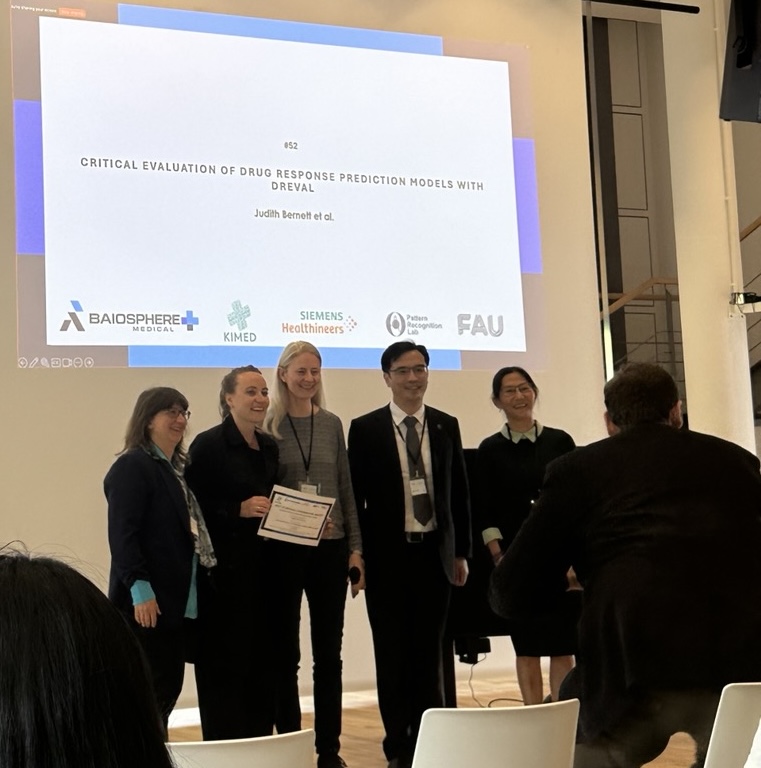
Judith Bernett has been awarded the Best Scientific Contribution Award by the German Association for AI in Medicine (KIMED) at the BAIOSPHERE Medical 2026 conference in Erlangen for her publication Critical evaluation of drug response prediction models with DrEval. We had a strong presence at this year’s BAIOSPHERE Medical conference, where around 200 researchers and…Read more
BIONETS goes RECOMB
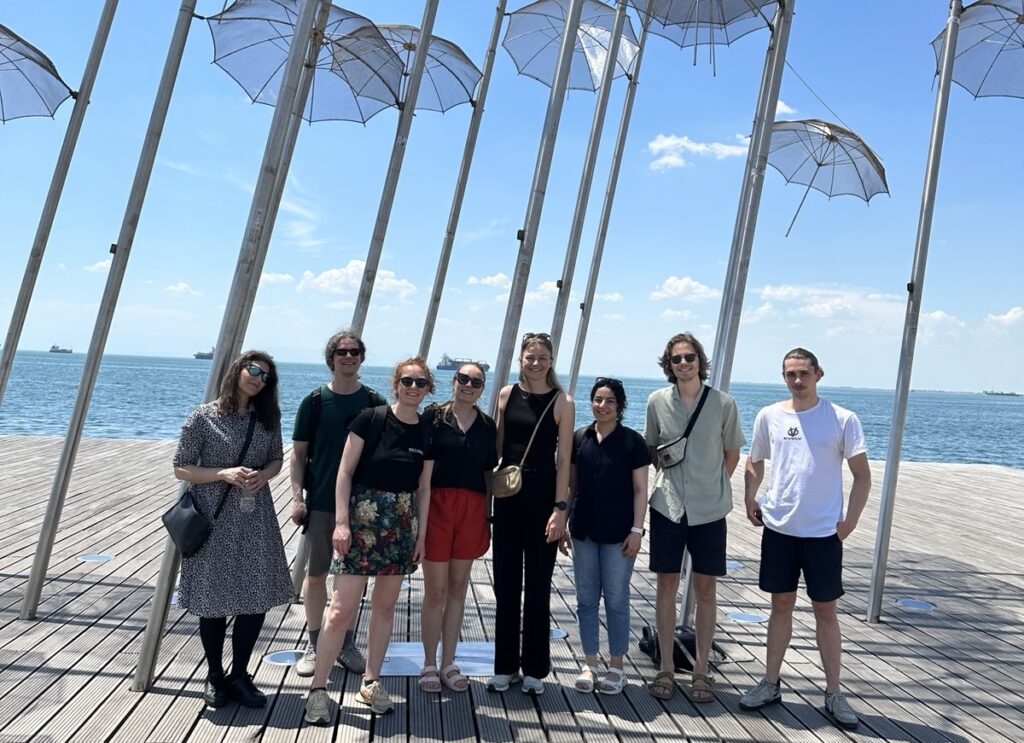
Bionets has attended the RECOMB 2026 conference in Thessaloniki https://recomb.org/recomb2026/.Read more